Should You Do a Roth Conversion After Retirement?
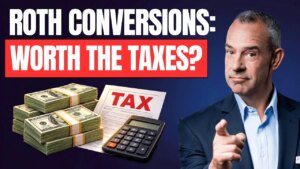
Roth conversions are often presented as an easy retirement win: pay taxes now, move money into a Roth IRA, and enjoy tax-free withdrawals later. But the decision is much more complicated than that. A conversion can make sense in the right situation, but it can also create unnecessary taxes, higher Medicare premiums, and cash-flow problems if the numbers do not line up.
The basic idea is simple. Money moved from a traditional IRA into a Roth IRA is generally added to taxable income in the year of the conversion. In exchange, qualified Roth withdrawals later can be tax-free. The real question is whether paying the tax today produces enough future benefit to justify the cost.
Look for Lower-Income Years
One of the best opportunities can come shortly after retirement. A paycheck may have stopped, while Social Security and required minimum distributions have not yet begun. That can create several years when taxable income is lower than it may be later.
Those years can be attractive for partial conversions because the retiree may be able to move money at a lower tax rate. But retirement does not automatically mean someone is in a low bracket. A pension, a working spouse, investment income, or a large asset sale can already create substantial taxable income.
That is why the decision should start with comparing today’s tax rate with the rate you may face in the future.
Make Sure You Can Afford the Tax Bill
A conversion only works if the tax bill fits comfortably into the rest of the retirement plan. Someone who relies heavily on IRA withdrawals to pay monthly expenses may not have as much room to convert as a retiree whose pension and Social Security already cover most spending.
Where the tax money comes from also matters. Paying the tax from cash outside the IRA can allow the full converted amount to remain invested in the Roth. But that does not mean retirees should drain emergency reserves or next year’s spending money just to fund a conversion.
Using additional IRA withdrawals to pay the tax can create even more taxable income. And there is no requirement to convert everything at once. Smaller annual conversions may be more practical than one large move.
Watch Social Security and Medicare
A Roth conversion can affect more than the ordinary income-tax bill. Increasing taxable income may cause more Social Security benefits to become taxable and can also increase future Medicare premiums through income-related surcharges.
Those costs belong in the calculation. A conversion that appears attractive based only on federal tax brackets may look less appealing after Medicare and Social Security consequences are included.
That is another reason Roth conversion planning often works best as a multiyear strategy rather than a single large transaction.
Charitable Giving Can Change the Answer
Charitable plans can also influence whether a conversion makes sense. Someone who already intends to make a large charitable gift may be able to coordinate that giving with a conversion year, potentially using the deduction to offset some taxable income.
But the episode stresses that the charitable gift should come first. Donating money solely to create a deduction usually does not make economic sense because a tax deduction only reduces taxable income; it does not reimburse the full amount donated.
There is another important consideration. If part of a traditional IRA is ultimately going to a qualifying charity, converting that portion may be unnecessary because the charity generally will not owe income tax on the inherited IRA. Paying the tax yourself beforehand could provide little benefit.
Think About Who Will Eventually Inherit the Money
Leaving money to children can make the Roth question more interesting. Many non-spouse beneficiaries generally must empty an inherited retirement account within 10 years. Traditional IRA withdrawals during those years can be added to the beneficiary’s taxable income.
If an adult child inherits the account while already in peak earning years, those withdrawals could face relatively high tax rates. In that situation, a parent who can convert at a lower rate may potentially reduce the family’s total tax burden.
The opposite can also be true. If the parent pays a high tax rate to convert while the child would likely withdraw the money at a lower rate, the conversion could actually leave the family worse off.
An inherited Roth can offer tax-free withdrawals when applicable rules are satisfied, although most adult beneficiaries still have to empty the account within the required period.
Your Retirement Comes First
Perhaps the most important point in the transcript is that estate planning should not come at the expense of the retiree’s own financial security. Leaving children a more tax-efficient inheritance is valuable only if the conversion does not compromise the money needed for retirement.
A Roth conversion can make sense when it takes advantage of a lower-income year, reduces future taxes, provides useful tax-free flexibility, or improves the after-tax value of an inheritance. It can also make sense to leave the traditional IRA exactly where it is.
The goal is not to maximize the size of the Roth account. It is to determine whether the future benefits are worth the tax bill today while still leaving enough money to comfortably enjoy retirement. That answer can change from year to year, which is why Roth conversions are best treated as a planning decision not a social-media rule.
Intended for educational purposes only. Opinions expressed are not intended as investment advice or to predict future performance. Past performance does not guarantee future results. Neither the information presented, nor any opinion expressed constitutes a solicitation for the purchase or sale of any security. Consult your financial professional before making any investment decisions. Opinions expressed are subject to change without notice.
IMPORTANT DISCLOSURES:
• Investment Advisory and Financial Planning Services are offered through Pure Financial Advisors, LLC. A Registered Investment Advisor.
• Pure Financial Advisors, LLC. does not offer tax or legal advice. Consult with a tax advisor or attorney regarding specific situations.
• Opinions expressed are subject to change without notice and are not intended as investment advice or to predict future performance.
• Investing involves risk including the potential loss of principal. No investment strategy can guarantee a profit or protect against loss in periods of declining values.
• All information is believed to be from reliable sources; however, we make no representation as to its completeness or accuracy.
• Intended for educational purposes only and are not intended as individualized advice or a guarantee that you will achieve a desired result. Before implementing any strategies discussed you should consult your tax and financial advisors.