The Retirement Mistake Your 80-Year-Old Self Would Warn You About
Retirement planning tends to revolve around money. People focus on Social Security, taxes, investment returns, and whether their portfolio is large enough to support the rest of their lives. But the episode argues that financial wealth is only one part of a successful retirement.
There are at least three forms of wealth that matter: financial wealth, time wealth, and health wealth. Money gives you resources, time gives you the freedom to use them, and health determines whether you can actually enjoy what you worked so hard to build.
Don’t Spend Your Best Years Chasing More
People in their 50s and 60s may be entering a rare period when all three forms of wealth can overlap. They may finally have significant savings, fewer demands from raising children, and enough health and energy to travel, exercise, learn, and pursue meaningful experiences.
The danger is continuing to work simply because more always feels safer. The episode describes clients who kept chasing another bonus, another promotion, or a larger portfolio even after they had already accumulated enough. Years later, they realized they had traded away some of the healthiest and most flexible years of their lives.
That does not mean everyone should retire as soon as possible. It means understanding when you have reached financial independence so that continuing to work becomes a choice rather than an obligation.
A Financial Plan Should Buy Freedom
One of the most important purposes of a retirement plan is identifying when work is no longer financially necessary. Knowing that number can change how someone experiences their career even if they decide to keep working.
The episode describes clients who felt burned out and desperate to retire until they discovered through planning that they were already financially independent. Once they knew they could leave, the pressure surrounding work changed. They could remain because they wanted to, not because they were afraid of what would happen if the paycheck disappeared.
That is the real value of financial independence. It is not simply accumulating enough money to stop working. It is creating control over your time.
Pursue What Money Cannot Buy
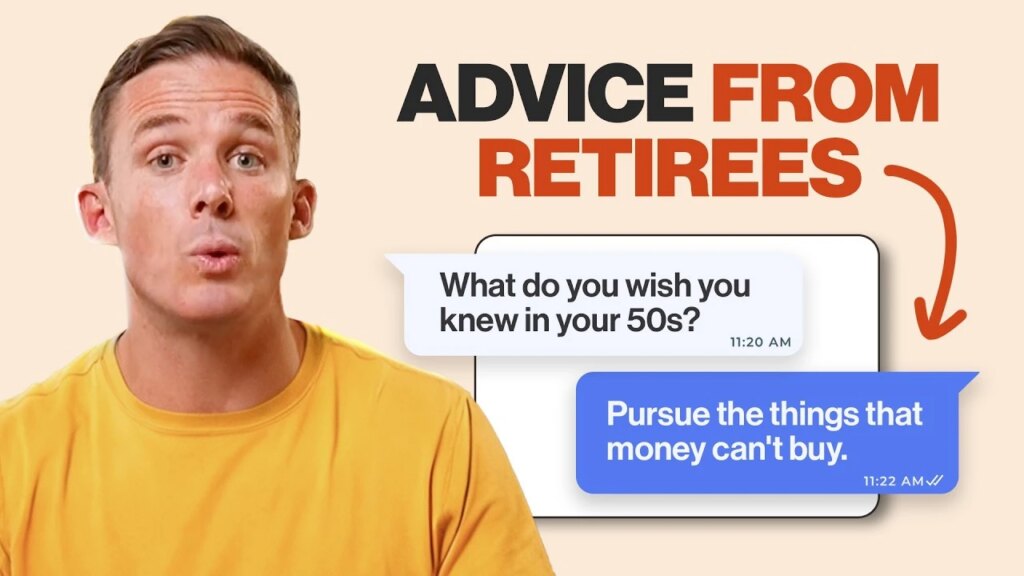
Once financial independence is established, the next challenge is deciding what to do with that freedom. A larger investment account cannot automatically provide strong relationships, physical health, peace of mind, or a sense of purpose.
Those things have to be developed. Retirement can provide more time to strengthen friendships, spend time with family, improve physical health, volunteer, learn, travel, or pursue interests that were neglected during busy working years.
The episode argues that people should not wait until retirement to begin building those parts of life. Relationships and health compound over time just like investments do. Ignoring them for decades and expecting them to suddenly flourish after the final day of work can be a difficult strategy.
Retirement Should Be a Period of Growth
Another major theme is neuroplasticity—the brain’s ability to continue adapting and forming new connections. People sometimes reach retirement believing that their interests and abilities are largely fixed, but the episode argues that continuing to learn and try unfamiliar things can keep life more engaging.
That could mean taking a photography class, learning a language, dancing, volunteering, traveling somewhere unfamiliar, exercising, practicing meditation, or simply doing something that requires sustained mental effort. The objective is not to find the perfect retirement hobby immediately. It is to become someone who continues trying new things.
Physical activity and social connection also matter. Exercise can support both physical and cognitive health, while relationships provide stimulation, connection, and meaning. A retirement filled only with passive leisure may therefore be less satisfying than one that continues to include challenges, relationships, and growth.
Don’t Wait Until Retirement to Protect Your Health
The episode ends with one of its strongest examples. A client had spent her life saving diligently and preparing financially for retirement. She finally retired, only to die within her first year away from work.
Her story illustrates the limitation of focusing exclusively on financial preparation. A perfectly funded retirement has limited value if poor health prevents someone from experiencing it.
The lesson is not that every health outcome can be controlled. It is that health deserves the same intentional investment as a 401(k). Exercise, preventive care, sleep, relationships, and reducing unnecessary chronic stress may not appear on a retirement spreadsheet, but they can determine how much of retirement someone is physically able to enjoy.
A successful retirement therefore requires more than answering, “Do I have enough money?” It also requires asking whether you have protected enough time, health, relationships, and curiosity to enjoy the freedom that money is supposed to provide.
Your 80-year-old self may not care whether you squeezed one more year of salary out of your career or added another percentage point to your portfolio. The more important question may be whether you used the years when you had money, time, and health at the same time and whether you recognized how valuable that window really was.
You should always consult a financial, tax, or legal professional familiar about your unique circumstances before making any financial decisions. This material is intended for educational purposes only. Nothing in this material constitutes a solicitation for the sale or purchase of any securities. Any mentioned rates of return are historical or hypothetical in nature and are not a guarantee of future returns.
Past performance does not guarantee future performance. Future returns may be lower or higher. Investments involve risk. Investment values will fluctuate with market conditions, and security positions, when sold, may be worth less or more than their original cost.