Your Portfolio May Look Fine. A Second Opinion Can Reveal What You’re Missing.
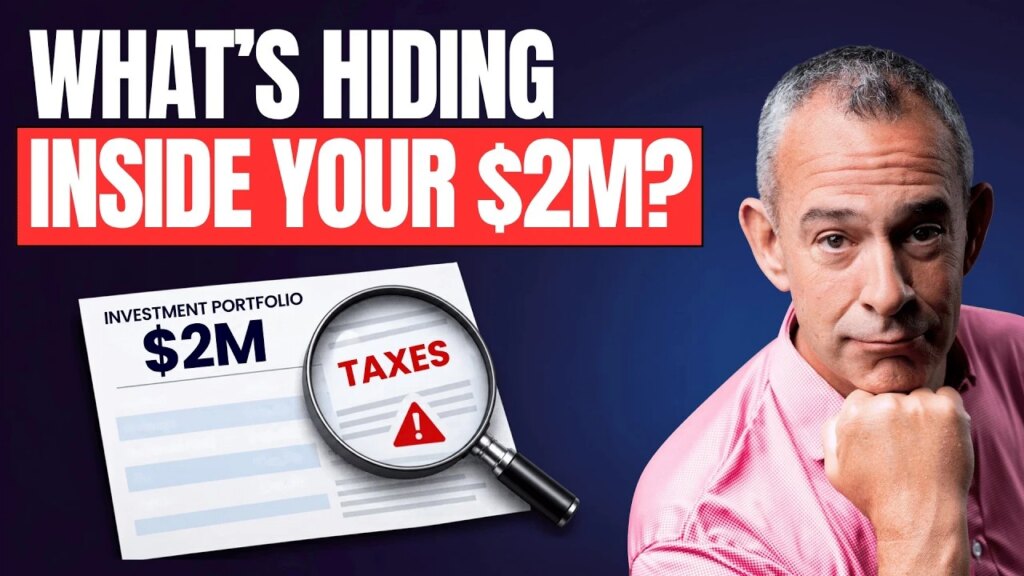
A retirement portfolio can look perfectly healthy on the surface. The balance may be growing, the investments may appear diversified, and the account statement may show no obvious problems. But a portfolio can still contain hidden fees, overlapping investments, unnecessary taxes, or risks that become much more serious once retirement begins.
That is why a second opinion can be valuable, especially in the years immediately before or after retirement. The purpose is not automatically to replace an advisor or overhaul every investment. It is to test whether the portfolio, tax strategy, costs, and retirement-income plan actually work together.
A Good-Looking Statement Can Still Hide Problems
Most investors naturally focus on account value and recent performance. If the balance is rising, the assumption is often that the strategy must be working. Performance alone, however, does not reveal whether the investor is taking too much risk, paying unnecessary expenses, or holding investments that are poorly suited for retirement.
A portfolio can outperform for several years while remaining dangerously concentrated. It can also contain products with surrender charges, complex fee structures, or limited liquidity that are not obvious from the first page of a statement. Those issues may not matter much during a strong market, but they can become much more important when withdrawals begin.
A second opinion should therefore look beyond the headline balance. The objective is to understand what the investor actually owns, how those investments behave, what they cost, and whether they fit the job the money will need to perform.
Taxes Can Matter as Much as Investment Returns
Retirement accounts do not all behave the same way when money comes out. Traditional IRA and 401(k) withdrawals are generally taxable as ordinary income, qualified Roth withdrawals can be tax-free, and taxable brokerage accounts can create capital gains depending on cost basis and investment history. Treating those accounts as interchangeable can lead to unnecessary taxes.
The order in which money is withdrawn can also affect more than the tax bill for that particular year. Larger taxable withdrawals can influence how much Social Security is taxable and, for Medicare beneficiaries, can affect future income-related Medicare premiums. Roth conversions can create additional planning opportunities, but they can also create tax problems if done without considering the rest of the household’s income.
A strong portfolio review should therefore include a tax strategy rather than simply a collection of investments. The question is not only whether the portfolio will grow, but how much of that growth the investor will actually keep after taxes.
The Fee You See May Not Be the Only Fee You Pay
Investors often know what they pay their financial advisor but have less visibility into the expenses inside the portfolio. Mutual funds and ETFs can have internal expense ratios, some products can have insurance or administrative costs, and certain investment structures may carry additional charges. Those expenses can accumulate even when they never appear as a separate bill.
A difference of a fraction of a percentage point can appear insignificant in a single year. Over a long retirement, however, recurring costs reduce the amount of money that remains invested and able to compound. The larger the portfolio, the larger the dollar impact can become.
This does not mean the cheapest investment is always the best investment. Advice, tax planning, financial planning, and specialized investment management can all provide real value. The important question is whether the investor understands the total cost and believes the services received justify what is being paid.
Owning More Funds Does Not Necessarily Mean You Are Diversified
A portfolio containing 10 or 15 funds can look broadly diversified. But several funds may own many of the same companies, creating much more concentration than the investor realizes. Someone could own a large-cap fund, a growth fund, a technology fund, and a broad market fund while repeatedly owning the same handful of stocks.
This overlap can become particularly dangerous when markets decline. What appeared to be several separate investments may all fall for essentially the same reason because they are exposed to the same companies, sectors, or investment style. Diversification should therefore be judged by the underlying holdings and risks rather than the number of line items on a statement.
A second opinion can reveal these hidden concentrations. It can also identify the opposite problem: a portfolio with so many funds that it has become unnecessarily complicated without meaningfully improving diversification.
Retirement Changes the Meaning of Risk
Investment risk feels different when someone is working and adding money to a portfolio. A market decline can be unpleasant, but new contributions continue buying investments and the worker may have decades to recover. Once retirement begins, the investor may be withdrawing money from the same portfolio that is falling.
That creates sequence-of-returns risk. Poor market performance early in retirement combined with ongoing withdrawals can damage a portfolio much more severely than the same poor returns occurring later. A portfolio that was appropriate during the accumulation years may therefore need to be reconsidered before retirement income begins.
The answer is not automatically to become extremely conservative. Retirees may still need growth to keep pace with inflation over a retirement that could last decades. The challenge is finding the right balance between growth, income, liquidity, and protection from being forced to sell investments during a major downturn.
Conflicts of Interest Are Worth Understanding
Financial professionals can be compensated in different ways. Some receive advisory fees, some receive commissions, and some may be paid through a combination of arrangements depending on the services or products involved. Compensation does not automatically mean the advice is inappropriate, but investors should understand how the person making the recommendation is paid.
Simple questions can reveal a great deal. Why was this particular investment selected? Are there lower-cost alternatives? Does the advisor or firm receive additional compensation if the product is purchased? What would the strategy look like if this product were removed?
An investor should be able to receive clear answers. The purpose is not to assume bad intentions but to understand whether financial incentives might influence recommendations. Transparency makes it easier to determine whether the investment is there because it is appropriate or because it is profitable for someone selling it.
Investments Are Not the Same Thing as a Retirement Plan
One of the biggest mistakes near retirement is assuming that having a portfolio means having a plan. A collection of mutual funds, stocks, bonds, or annuities does not answer when Social Security should begin, where retirement income should come from, or how taxes should be managed. Those decisions require coordination.
A complete retirement plan should identify expected spending and dependable income sources before determining how much must come from investments. It should also address what happens during a severe market decline, how large one-time expenses will be funded, and how the withdrawal strategy changes as Social Security and required distributions begin.
Without that framework, investment decisions can become isolated reactions. The portfolio may be managed reasonably well while the broader retirement strategy remains undefined. That gap often becomes visible only after the paycheck stops.
Withdrawal Strategy Can Change the Outcome
Two retirees with identical investment portfolios can have very different results depending on how they withdraw money. One might automatically take every dollar from a traditional IRA, while another strategically uses taxable, traditional, and Roth assets depending on annual tax conditions. The second retiree may have more flexibility to manage taxable income.
Withdrawals also interact with investment risk. Selling stocks after a major decline can permanently reduce the number of shares available to participate in the recovery. Holding appropriate cash or lower-volatility assets can provide another source of spending during difficult markets.
There is no universal withdrawal order that works for every household. The best strategy depends on taxes, Social Security, pensions, RMDs, estate goals, and portfolio structure. What matters is having a strategy before the market forces a decision.
Social Security Should Be Part of the Portfolio Conversation
Social Security is one of the largest sources of retirement income for many households, yet it is sometimes analyzed separately from the investment portfolio. That can be a mistake because claiming decisions affect how much the portfolio needs to provide each year. Delaying benefits may require larger portfolio withdrawals early in retirement but can increase guaranteed income later.
The decision can also affect a surviving spouse. For married couples, delaying the higher earner’s benefit can potentially increase the survivor benefit available after one spouse dies. That means the claiming decision is not simply about finding a personal break-even age.
A second opinion should therefore examine Social Security alongside the portfolio. Retirement income works as one system, and optimizing one component without considering the others can produce a weaker overall result.
A Portfolio Can Be Too Aggressive Without Looking Aggressive
Risk can hide inside otherwise familiar investments. A retiree may own several diversified-looking stock funds but still have most of the portfolio concentrated in large growth companies. Another investor may have substantial bond exposure but hold bonds that are unusually sensitive to interest-rate changes or credit risk.
The investor’s behavior matters too. A portfolio is only appropriate if the owner can realistically remain invested during difficult periods. Someone who repeatedly sells during market declines may need a different risk structure than an investor who can comfortably tolerate substantial volatility.
That is why risk questionnaires alone are not enough. A useful review should compare the portfolio with actual spending needs, withdrawal plans, time horizon, and past behavior during market stress.
Your Portfolio Should Have a Job Description
Every major portion of a retirement portfolio should serve a purpose. Some assets may provide near-term spending, others may generate income, and others may remain invested for long-term growth. When every account has a role, the portfolio becomes easier to manage during both good and bad markets.
Problems arise when investments have accumulated over decades without a clear reason for remaining in the portfolio. Old employer plans, funds purchased years ago, inherited investments, and products recommended by previous advisors can all remain simply because no one has revisited them. Eventually the portfolio can become a collection of financial decisions made at different stages of life.
Retirement is an appropriate time to simplify. The objective is not fewer investments for the sake of simplicity, but a portfolio in which every component contributes to the retirement plan.
Estate Planning Should Not Be an Afterthought
A second opinion should also consider what happens to the portfolio after death. Traditional retirement accounts, Roth accounts, taxable investments, and insurance products can have very different consequences for beneficiaries. The way assets are titled and the beneficiary designations attached to them can be just as important as investment performance.
This becomes especially important when the investor wants to leave money to children, grandchildren, charities, or a surviving spouse. The most tax-efficient asset for one beneficiary may not be the best asset for another. Estate goals can therefore influence which accounts should be spent first and which should potentially be preserved.
Beneficiary designations should also be reviewed periodically. A sophisticated investment strategy cannot fix an outdated beneficiary form that sends money somewhere the owner no longer intends.
Sometimes the Best Second Opinion Says Nothing Needs to Change
A second opinion does not have to uncover a major mistake to be worthwhile. It may confirm that the portfolio is appropriately diversified, expenses are reasonable, tax planning is thoughtful, and the retirement-income strategy is sustainable. That confirmation can itself provide value.
Constantly changing investments can be just as damaging as failing to review them. Chasing performance, switching advisors repeatedly, or rebuilding a portfolio every time markets move can increase taxes, costs, and behavioral mistakes. A good review should distinguish genuine problems from differences in investment philosophy.
The purpose is not change for the sake of change. It is confidence that the current strategy has been tested from multiple angles and still makes sense.
The Best Time to Find a Problem Is Before Retirement
Small weaknesses become harder to fix once withdrawals begin. An expensive investment can potentially be replaced, an overly concentrated portfolio can be diversified, and tax strategy can be adjusted while someone still has flexibility. The closer retirement gets, the more valuable that flexibility becomes.
After retirement, mistakes can have larger consequences because earned income may no longer be available to replenish the portfolio. Large taxes, unnecessary fees, or a badly timed market loss can directly affect future spending. That makes the years leading into retirement an important time for a comprehensive review.
The objective is not predicting every future market or tax change. It is removing avoidable problems before retirement makes them harder to absorb.
A Second Opinion Is Really a Stress Test
The most useful portfolio review asks uncomfortable questions. What happens if stocks fall 30% shortly after retirement? What happens if one spouse dies? What happens if taxes increase, healthcare expenses rise, or the retiree lives longer than expected?
The portfolio should be evaluated under those conditions rather than only under an average-return projection. Retirement plans rarely fail because everything happened exactly as expected. They become vulnerable when several unfavorable events occur at the same time.
A strong plan does not need to eliminate every possible risk. It should identify the risks that matter most and establish how the household will respond when one of them occurs.
The Goal Is to Know What You Own and Why You Own It
Most investors do not need a perfect portfolio. They need a portfolio they understand, can afford, and can stick with through changing markets. Every investment should have a reason for being there, every major cost should be understood, and the withdrawal strategy should connect directly to the retirement plan.
A second opinion can uncover hidden fees, tax inefficiencies, overlapping investments, excessive risk, or conflicts that were easy to miss. It can also confirm that the strategy already in place is doing exactly what it is supposed to do. Either outcome can be useful.
The closer someone gets to retirement, the less important it becomes to simply own good investments. What matters is whether those investments work together to support income, taxes, Social Security, spending, and long-term financial security.
Intended for educational purposes only. Opinions expressed are not intended as investment advice or to predict future performance. Past performance does not guarantee future results. Neither the information presented, nor any opinion expressed constitutes a solicitation for the purchase or sale of any security. Consult your financial professional before making any investment decisions. Opinions expressed are subject to change without notice.
IMPORTANT DISCLOSURES:
• Investment Advisory and Financial Planning Services are offered through Pure Financial Advisors, LLC. A Registered Investment Advisor.
• Pure Financial Advisors, LLC. does not offer tax or legal advice. Consult with a tax advisor or attorney regarding specific situations.
• Opinions expressed are subject to change without notice and are not intended as investment advice or to predict future performance.
• Investing involves risk including the potential loss of principal. No investment strategy can guarantee a profit or protect against loss in periods of declining values.
• All information is believed to be from reliable sources; however, we make no representation as to its completeness or accuracy.
• Intended for educational purposes only and are not intended as individualized advice or a guarantee that you will achieve a desired result. Before implementing any strategies discussed you should consult your tax and financial advisors.